Sanfilippo Syndrome: Boy’s Gene Therapy Priced at £2.95m
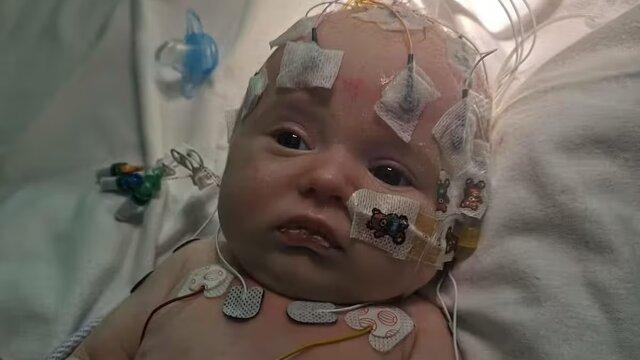
A mother in Swansea says she must find almost £3m for a newly approved gene therapy for her son Tate, who has Sanfilippo Syndrome. She has raised more than £160,000, about 5% of the cost, and Welsh health officials are talking to US counterparts.
The mother of five-year-old Tate McDaid, from Swansea, says she must find almost £3m to pay for a gene therapy for his rare form of childhood dementia, now that there's finally treatment for the condition.
Tate was diagnosed with Sanfilippo Syndrome at the age of four. In September, the first gene therapy for children with the condition was approved in the US.
His mother, Tammy, said she spent "months praying" for that approval. Then she saw the price.
A one-time treatment with a US price tag
The US price for the one-time treatment has been set at $3.95m, which Tammy puts at £2.95m per child. It is unclear how families outside the US can fund it.
"I was excited when the treatment initially got approved but then reality hit hard the next day," Tammy said.
She contacted the developer, Ultragenyx, to ask how families without US health insurance would cover the cost. "We understand what they are charging for American citizens, but they've got health insurance," she said. "What is it for us in the UK?"
Ultragenyx said it could not give one figure. "There is not a single estimate we can provide for the total cost of care for an international patient, as those costs would depend on the patient's individual medical needs and the treating institution," the company said.
Health officials in Wales are talking to their US counterparts about possible access routes for Tate.
What the condition does
Sanfilippo Syndrome Type A, also called Mucopolysaccharidosis type III, is often described as "childhood Alzheimer's" or "childhood dementia". It causes a gradual loss of abilities such as walking and eating.
The Society for Mucopolysaccharide Diseases, a charity that supports affected children, says about 140 children in the UK have the condition. There is currently no cure.
The new drug, FAYUVI, could delay the onset of symptoms and let Tate stay active for longer. The condition can progress more rapidly after the age of five, and the treatment is not yet available in the UK.
Fundraising far short of the target
Tammy began fundraising before the US Food and Drug Administration approved the drug. She now has more than £160,000, about 5% of the estimated cost.
"Unfortunately, we're in a world where we need millions, not hundreds of thousands," she said. She hopes the company might lower the price, though she expects it would "still be in the millions".
"If a millionaire turned around tomorrow and gave us the money, we'd go to the US straight away," she said.
Ultragenyx said it is pursuing a global regulatory strategy and that FDA approval is "an important first step" in its long-term goal of bringing the treatment to families around the world. It acknowledged the urgency facing families and why some may consider travelling to the US for gene therapy.
Tammy describes her son as "the happiest little man" who is "blissfully unaware" of his problems. He does not speak, and she says his mobility is everything to him.
Tate turns six this month, and Tammy says he has already shown signs of cognitive decline. "The older he gets the less the treatment will work and the more ability he will lose in the process," she said. "I feel like we are at a turning point and I'm petrified."