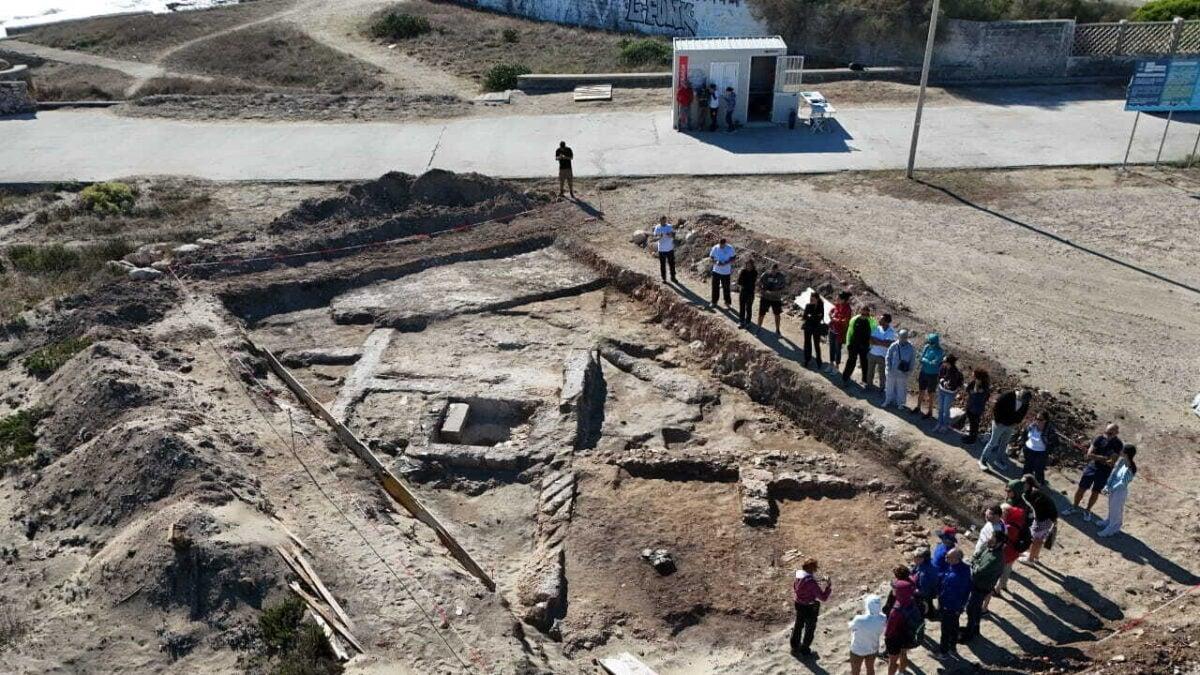
Archaeologists have identified a Roman port on Italy’s Adriatic coast that predates a pier commissioned by Emperor Hadrian, alongside a shoreline site that may have produced wine for shipment. The discoveries at San Giovanni offer evidence of how port infrastructure and production could operate together.
The site lies at Le Cesine, in the San Giovanni area of Vernole, in Lecce province. Researchers presented results from the 2026 field season at the Superintendency of Archaeology, Fine Arts and Landscape for the provinces of Brindisi, Lecce and Taranto.
Reading the port beneath the water
The University of Salento’s Department of Cultural Heritage leads the project through its ArcheoSub Group. Professor Rita Auriemma directs investigations on land and underwater.
Offshore, divers examined a port section in front of the former hydrological building near the shore. The structure is thought to date to the Augustan period, spanning the first century BCE and first century CE, placing it earlier than Hadrian’s pier.
Its form and foundations helped researchers assess how it was built and installed. The team also collected samples from the pier’s large foundation blocks.
Earlier campaign plans described a straight structure ending in a broad platform, with foundations still underwater. Researchers have also been investigating how it relates to a nearby northern structure, possibly a tower-beacon or a submerged church.
Production beside the docks
On shore, archaeologists found a production area directly in front of the docks. Workers there likely made wine and prepared it for transport, linking the settlement’s activity to the harbor.
Investigations also focused on a large plastered basin. Researchers have considered whether it served wine production or the processing of salted fish, while the newly reported findings point to a probable wine-making installation.
The combination of a port and a possible production site offers a glimpse of the practical network behind Roman trade: goods could be prepared close to the waterfront before being shipped. The findings also add evidence about work and commerce along this stretch of the Adriatic coast.
The 2026 campaign ran from September 7 to October 4, with archaeologists working both on land and below the water.