Israel’s Nuclear Ambiguity Faces Pressure After 60 Years of Denial
Israel and the United States have long avoided formally acknowledging Israel’s nuclear arsenal. That policy faces growing scrutiny as the countries wage war against Iran, a U.S.-Saudi nuclear cooperation agreement awaits Congress and U.S. lawmakers question what happens if nuclear weapons are used.
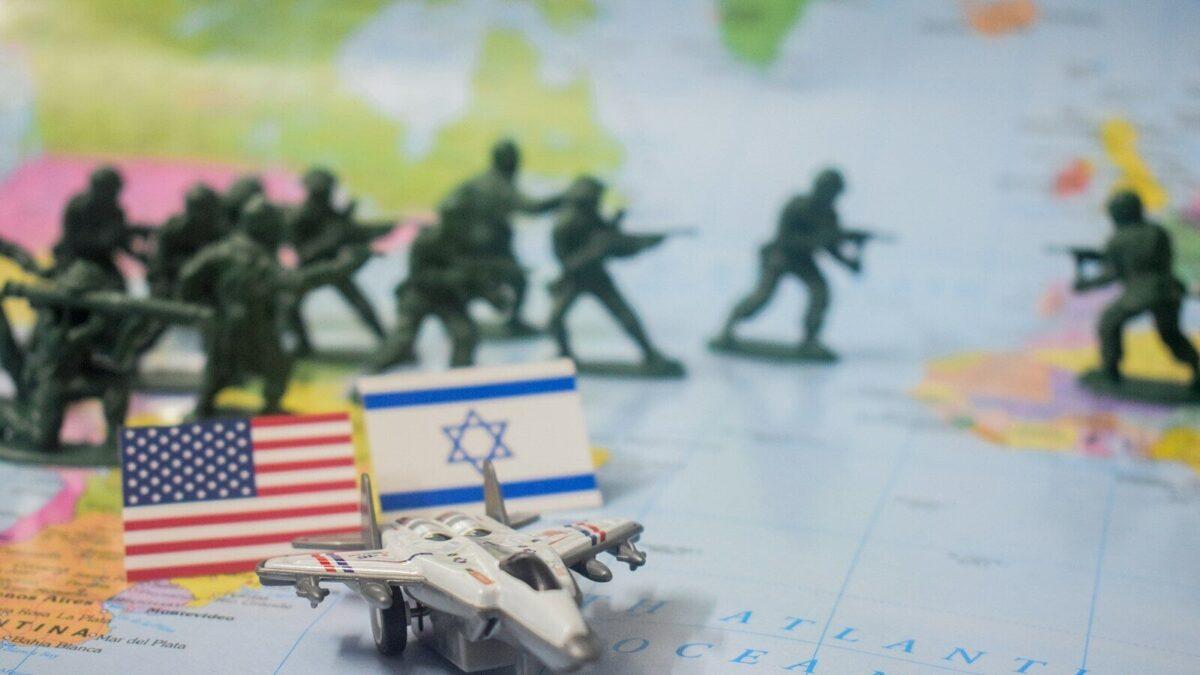
U.S. lawmakers are questioning Israel’s decades-old nuclear ambiguity as the United States and Israel wage war against Iran, raising scrutiny of a policy that has allowed both governments to avoid formally acknowledging Israel’s arsenal.
The 60 years of denial about Israel’s nuclear weapons program are also colliding with a pending U.S.-Saudi nuclear cooperation agreement and debate in Washington over military aid to Israel.
The policy has long relied on hints rather than confirmation. In early 1960, an American diplomat aboard an Israeli helicopter spotted a construction site in the Negev desert, about 20 miles west of the Dead Sea.
Addy Cohen, an official from Israel’s Finance Ministry, called it a “textile factory.” The site was the Dimona nuclear facility, later known as the birthplace of the Middle East’s only nuclear arsenal.
A secret U.S. diplomatic telegram said Cohen initially treated questions about the site lightly, but gave the impression that he believed the reactor could eventually be used for weapons purposes. U.S. intelligence later identified the facility’s nature.
Five years after the helicopter ride, U.S. nuclear officials discovered that a Pennsylvania uranium plant was missing hundreds of pounds of weapons-grade enriched uranium. Some U.S. intelligence officials argued it had been diverted to Israel’s program.
Neither the United States nor Israel has formally acknowledged the development of the arsenal. The approach, known as opacity or ambiguity, has helped Washington maintain its public opposition to other countries developing nuclear weapons while sparing Israel questions about how it acquired a bomb.
That arrangement faces pressure as regional nuclear programs advance. The United States and Israel are fighting Iran partly to prevent Tehran from obtaining a nuclear weapon, while a nuclear cooperation agreement between Washington and Saudi Arabia is pending before Congress.
President Donald Trump said Tuesday that the United States may cut off nearly $4 billion in military aid to Israel at the end of the year because “they no longer need it.” Democratic lawmakers and advocacy groups have also called for Washington to stop maintaining ambiguity about Israel’s weapons.
Rep. Joaquin Castro, a Democrat who serves on the House Foreign Affairs and Intelligence Committees, called the policy outdated and said it “has become reckless and dangerous.”
Castro said the United States risks fighting alongside Israel without knowing “their red line” for nuclear use or describing contingency plans if the weapons are deployed or nuclear facilities are struck.
Israeli Prime Minister Benjamin Netanyahu referred to the “textile factory” episode in a July 14 speech to the country’s Atomic Energy Commission head. Historian Avner Cohen has described the arsenal as the world’s “worst kept secret.”
U.S. inspectors never found the secret underground facility beneath Dimona used to produce bomb-grade plutonium. Israeli officials would wall off its elevator before inspectors arrived, according to a 2024 Hebrew-language television documentary.