Dire Wolves: Why Scientists Reject ‘De-Extinction’ Claim
Researchers argue that Colossal Biosciences’ gene-edited wolves do not restore the extinct dire wolf lineage. They say the animals have some dire-wolf-like traits, but the species’ evolutionary history, population and vanished habitat cannot be recreated by editing grey wolf cells.
Biologist Andrew Davinack and biochemist Charlotte Daniels argue that Colossal Biosciences did not bring back the dire wolf, saying the company’s gene-edited animals cannot restore an extinct evolutionary lineage.
In a paper published in Biology Letters, the Wheaton College Massachusetts researchers call the claim “lineage-genome conflation”: treating genetic edits and revived physical traits as if they restored a species’ history.
Edited grey wolves, not a restored lineage
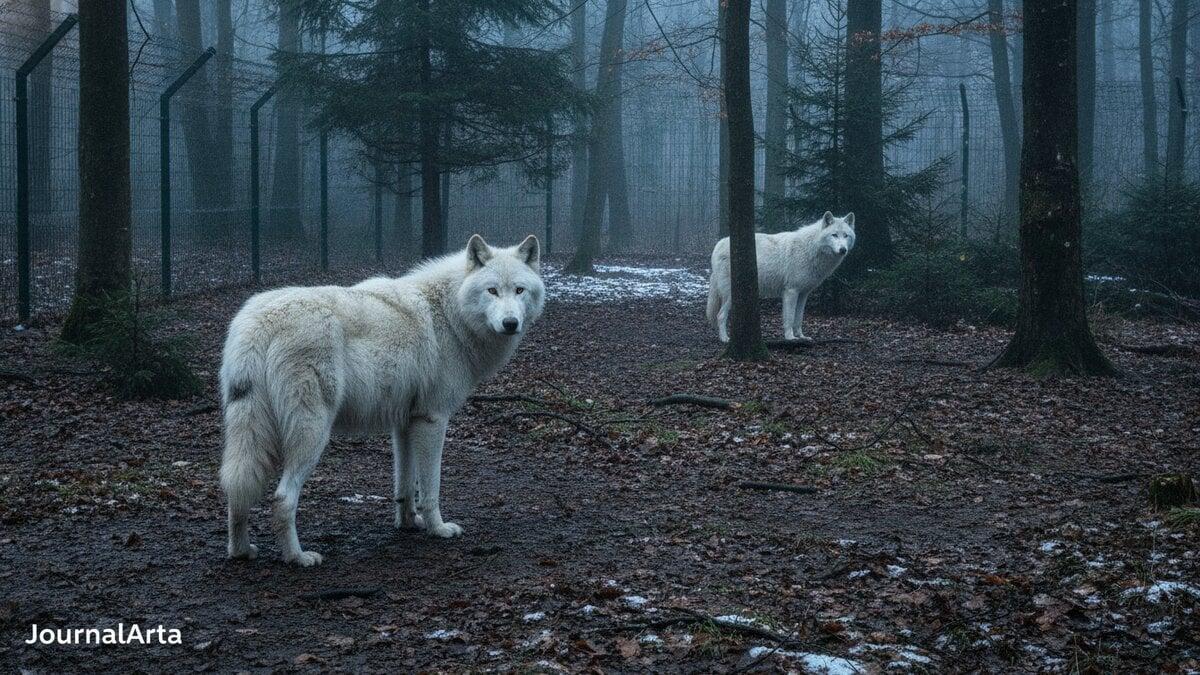
Colossal Biosciences edited grey wolf cells and bred animals with traits more like dire wolves, including larger bodies, bigger teeth and paler coats. Davinack and Daniels say those changes do not make the animals dire wolves.
“Here, we argue that de-extinction cannot recover extinct species because extinction represents the termination of an evolutionary lineage, not merely the disappearance of genetic information,” the researchers write.
Their argument is that a species is more than its DNA. Genes and the physical characteristics they shape emerge through a continuous evolutionary history, which the researchers say cannot be recovered by modifying another species’ genome.
They also question whether a small number of engineered animals could reproduce the genetic variation of a larger population or restore the environment in which an extinct species lived.
Dire wolves lived more than 10,000 years ago in conditions unlike those of today. Their climate, food sources, predators and other ecological relationships are no longer present, the researchers say.
Why terminology matters
“A reconstructed genome, even if highly accurate, represents at most a partial snapshot of an individual organism,” Davinack and Daniels write.
They argue that calling such work “de-extinction” can misrepresent what the technology achieves and make it harder to assess scientific progress. They are urging private companies and media outlets to describe the work more precisely.
The researchers distinguish between goals such as lineage restoration, genetic recovery, phenotypic reconstruction, ecological substitution and restoring historical communities. Each, they say, needs different measures of success.
They do not argue that de-extinction is impossible. Preserved cells or embryos could offer a stronger route, they say, because they retain more biological continuity than edits made to a living relative.
Scientists used cell preservation in work involving the Pyrenean ibex in 2003. The animal did not survive, but Davinack and Daniels say that effort had a stronger claim to de-extinction.
The researchers say their criticism is about how the work is described, not whether genetic engineering has value. “Greater precision in terminology therefore has practical consequences,” they write.