Rajendra Gupta’s Universe Theory Passes a Light-Element Test
Physicist Rajendra Gupta says his alternative cosmological model can explain the abundances of light elements formed shortly after the Big Bang. The controversial theory claims the universe could be 26.7 billion years old, but it has not yet reproduced all observations behind the standard model.
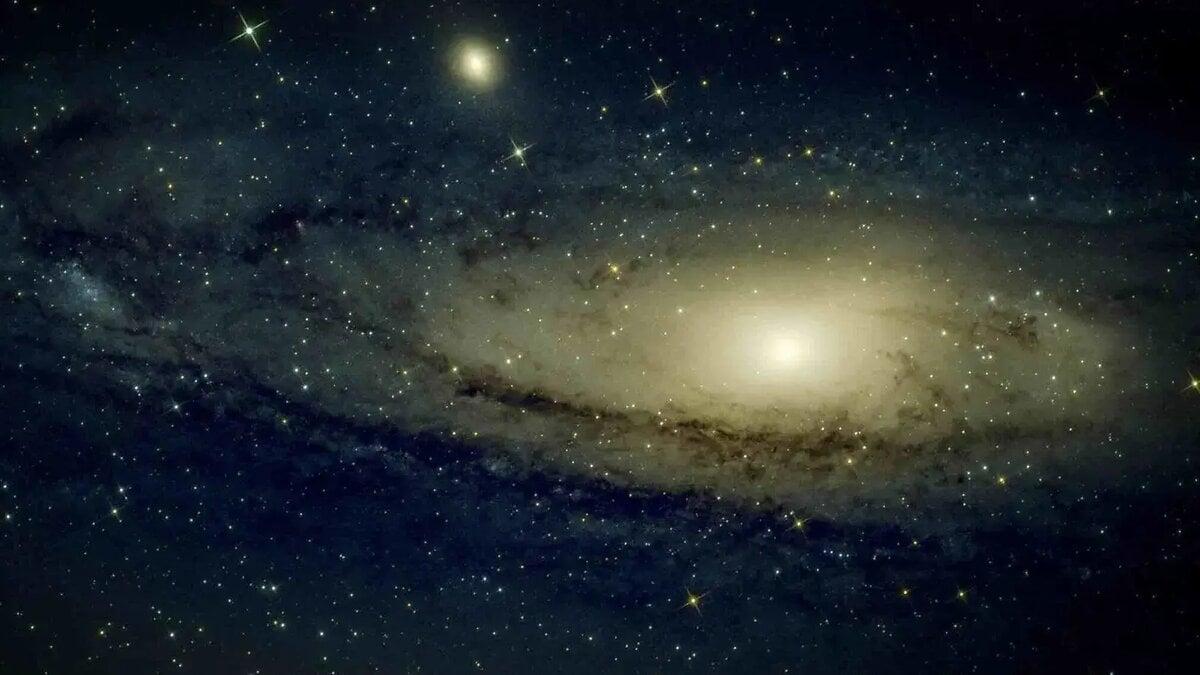
Physicist Rajendra Gupta of the University of Ottawa says his alternative cosmological model can reproduce the abundances of light elements formed shortly after the Big Bang, while proposing that the universe could be 26.7 billion years old. The controversial theory claims the universe is nearly twice as old as estimates in the standard model suggest.
The result is a test of the model, not proof that it describes the cosmos. Gupta and colleague Nikolaos Samaras say their framework also offers an explanation for galaxy rotation curves without requiring dark matter.
How the model differs
Known as covarying coupling constants plus tired light, or CCC+TL, the framework proposes that changes in fundamental physical constants could account for effects commonly attributed to dark matter or dark energy.
The study, published in the journal Universe, focuses on whether CCC+TL can match predictions for the quantities of light elements produced shortly after the Big Bang. The researchers say it passes that consistency test.
Gupta said the model also predicts galaxies at distances beyond those reached by the James Webb Space Telescope. “Impossible early galaxies become predictable galaxies,” he said in a press release.
He added: “We predict that galaxies exist well beyond the distances the James Webb Space Telescope has reached.”
More observations needed
The model’s implications could be tested through observations of very distant galaxies. The telescope’s GLIMPSE program is slated to search for exceptionally distant galaxies, potentially at redshifts exceeding 50.
In the standard model, massive galaxies are difficult to form at very early times because the universe may not have existed long enough for them to develop. CCC+TL does not impose the same limits, the study’s account says.
The framework remains outside mainstream cosmological views and has not shown that it can reproduce all observations supporting the standard model. Gupta and his colleagues hope observations from the James Webb Space Telescope and other observatories will test whether it can account for that broader evidence.
“The success should encourage astronomers to take the new model seriously,” Gupta said. “It is challenging to understand and apply, but we believe it extends the physics of the Universe beyond ΛCDM limits.”