Bird Flu Caused Catastrophic Die-Offs as Seals Hit Red List
H5N1 avian influenza has killed more than 53,000 female elephant seals on South Georgia, and the IUCN has raised the species' extinction risk for the first time because of the virus. Scientists say other species may be at risk but are harder to assess.
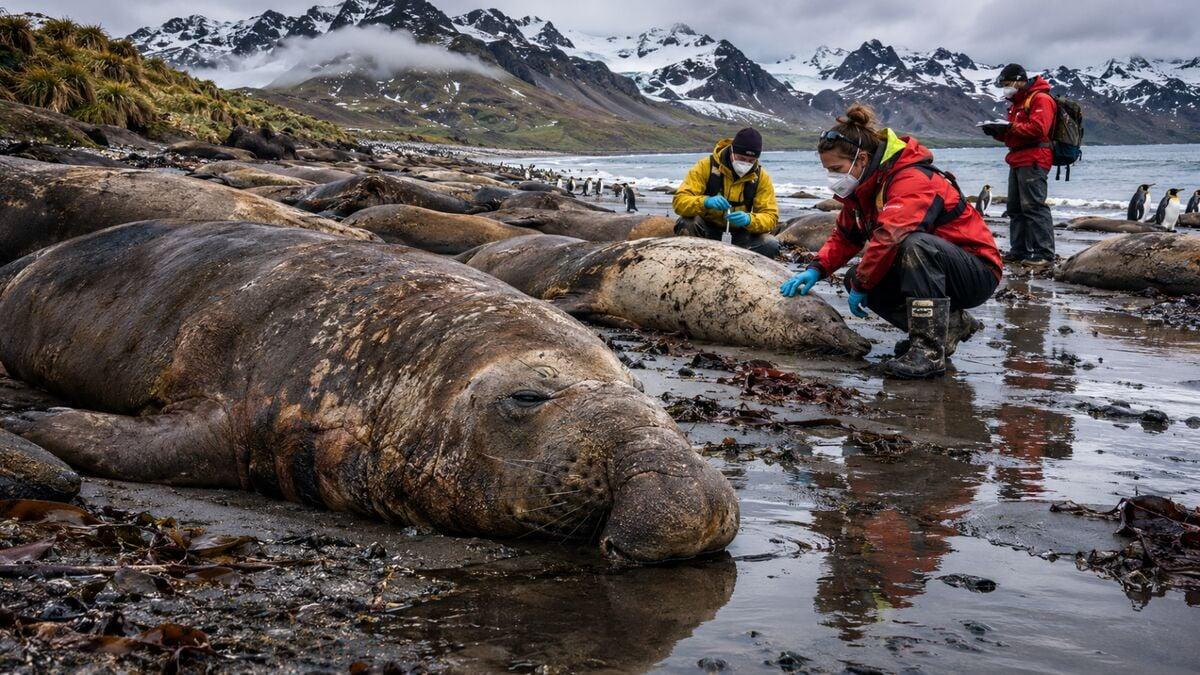
Bird flu caused catastrophic die-offs in wildlife across several continents, and scientists say the full toll is still being counted as the IUCN, the global conservation body, prepares to update its red list of threatened species. So far the H5N1 virus has changed the listing of one animal: the southern elephant seal.
The outbreak on the sub-Antarctic island of South Georgia began in 2023. Brown skuas, migratory seabirds, arrived carrying the virus. Within months, elephant seals that had come ashore to breed fell ill.
Mothers and newborn pups were weak and trembling, and many struggled to breathe. By 2025, more than 53,000 female elephant seals had died on the island. South Georgia is home to more than half of the global breeding population.
The virus is a highly potent strain that began circulating in the northern hemisphere in 2021. It has now reached four of the five main southern elephant seal populations. In some South Atlantic colonies, more than 90% of newborn pups have died, along with about half of all adult females.
“This is a horror show for wildlife,” said Ruth Cromie, coordinator of a UN taskforce on avian influenza and wildlife. “The scale of mortality is absolutely unprecedented.”
First listing change tied to H5N1
In April, the IUCN red list moved the southern elephant seal up two categories, from “least concern” to “vulnerable”. It was the first time a species has had its extinction risk raised explicitly because of H5N1.
The listing says scientists suspect the global population has fallen by nearly a third. Models suggest many populations will take decades to recover. Researchers have found few antibodies to the disease in surviving animals.
Avian influenza now threatens at least 40 bird species, according to BirdLife International, a global conservation partnership. Yet no other seal or bird has had its conservation status changed. Scientists warn that does not mean no other species is being pushed toward the brink.
Why assessments lag
The red list has analyzed nearly 176,000 species so far. It aims to reach 260,000 species by 2030, plus 142,000 reassessments. Most species are reassessed by expert panels only about once a decade, and the list itself is updated two to three times a year.
Birds are the exception. BirdLife International assesses the world's 11,000-plus bird species and reviews hundreds each year, so extinction risk is better understood for birds than for any other animal group.
Even so, deaths can come faster than scientists can convene and publish under peer review. “We still need to get these things out there,” said Rob Martin, senior red list officer at BirdLife International.
Species are generally moved to a higher risk category after a sustained population decline over three generations. Other triggers include a small population in decline, a restricted range, or calculations showing the species could soon become extinct. Assessors also need a baseline population figure before they can tell whether a species has crossed a threshold.