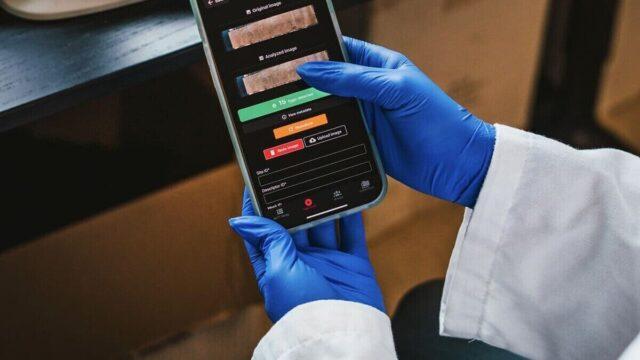
Nvidia Launches Nemotron Tools for Science Research
Nvidia introduced an open model, chemistry dataset and training recipes for researchers developing science-focused AI agents. The release includes LitmusBench v0.2, a dataset with nearly 50,000 chemistry questions, and examples of research institutions and life sciences companies using the tools.
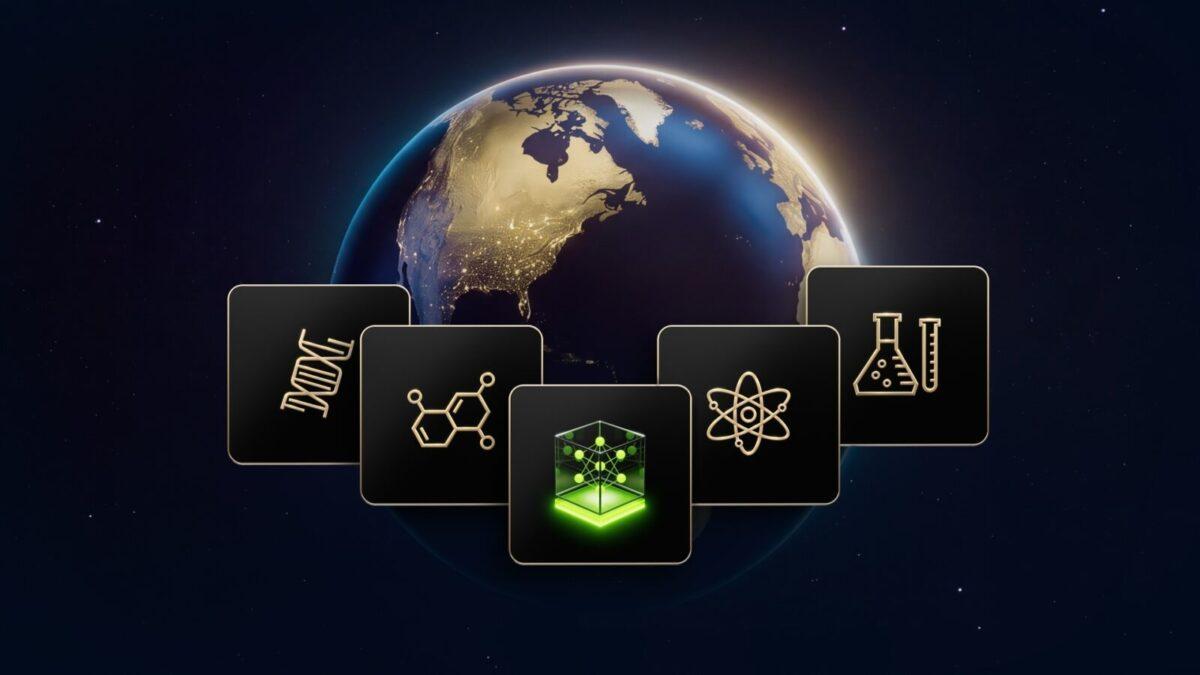
Nvidia introduced Nemotron for Science on November 16, 2026, combining an open AI model, chemistry data and training recipes for scientific research. The announcement came as Nvidia’s stock extends declines, though the release did not provide any stock-market figures.
The package is designed to help researchers build specialized AI agents that work through scientific problems and use research tools. Nvidia said the applications include chemistry experiments, protein design and drug discovery.
A chemistry dataset and research examples
One component, LitmusBench v0.2, contains nearly 50,000 questions for training and evaluating language models on chemistry reasoning. The dataset draws on molecular properties and experimental drug discovery data, and is intended to help models predict how molecules behave, including their solubility and how the human body processes them.
Life sciences companies Lila Sciences, Terray Therapeutics and Therna are using or customizing Nemotron 3.5 Super VL for tasks including extracting chemical knowledge, planning experiments, and designing therapeutics and laboratory protocols. Argonne and Jülich Supercomputing Centre are integrating it into AI agents for drug and scientific discovery.
Terray post-trained the model to extract reactants, products and reaction conditions from scientific diagrams. Nvidia said it surpassed previously published results on two benchmarks and recovered about 76% of annotated reactions on the RxnScribe test under its matching criteria.
Lila Sciences used the model to design protocols for automated laboratories. Nvidia said post-training with laboratory feedback nearly doubled its accuracy in making quantum dots to 61%, compared with 54% for GPT-6 Astra, at 10-20x lower inference cost.
Therna worked with Nvidia to adapt the model for mRNA therapeutic design. Nvidia said it nearly doubled accuracy in predicting protein-expression ranges over frontier models, and that scientists preferred its explanations to those from the base model in 96% of comparisons.
Research centers test the model
Argonne is integrating Nemotron into StructBioReasoner, a multi-agent system for designing and evaluating protein-based therapeutic candidates for cancer and other diseases. KTH Royal Institute of Technology built an agent that repairs broken GROMACS molecular dynamics setups.
In an overnight run on one NVIDIA DGX Spark system, the KTH agent fixed 81% of test cases with reasoning enabled. GROMACS independently checked every fix, Nvidia said.
RIKEN made Nemotron models available through its RIKYU AI supercomputing platform. Nvidia said Nemotron 3.5 Super VL and the LitmusBench v0.2 dataset are available on Hugging Face, and that the model is optimized to run locally on a 128GB NVIDIA DGX Spark system.
“Nemotron for Science gives researchers open models, scientific data and post-training recipes to build specialized agents that reason through scientific problems and use CUDA-X accelerated tools to turn ideas into discoveries,” said Ian Buck, Nvidia’s vice president of hyperscale and high-performance computing.
 Take the quizWhat Kind of Holiday Spender Are You? Take the Black Friday QuizStart →




 Lifestyle7 Signs Your Social Battery Is Running Low (and Why You Keep Cancelling Plans)
 Lifestyle · Food & HealthThanksgiving Food Safety: How Long Leftovers Last and the Safe Turkey Temperature
 Lifestyle7 Quiet Habits of Emotionally Intelligent People, According to Psychologists
 LifestylePeople Who Don’t Like Celebrating Their Birthday Often Share These 7 Traits