US-Iran Doha Talks Make Positive Progress on MoU
US and Iran made positive progress in indirect talks in Doha, with Qatar mediating discussions on de-escalation, regional transparency and humanitarian and economic issues.
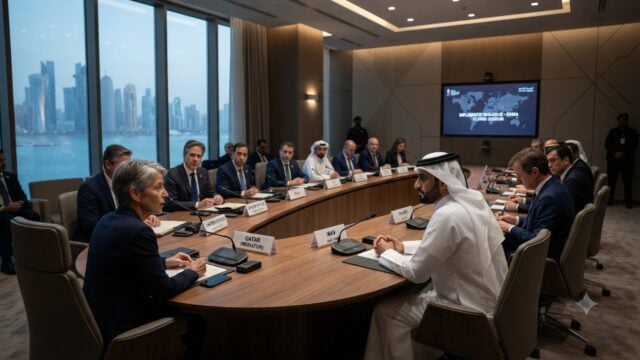
DOHA, JOURNALARTA.COM - The international community is following the latest developments from Qatar's capital, Doha, where delegations from the United States and Iran reportedly completed a series of indirect meetings.
According to the latest reports, the discussions showed quite significant positive progress regarding the memorandum of understanding that has long served as the basis for communication between the two countries.
The Doha meeting is seen as a crucial effort to ease longstanding tensions and find common ground on security and economic issues that are a major concern for both sides.
Building Trust at the Negotiating Table
The indirect talks, in which a third party from Qatar acted as mediator, are considered the most effective diplomatic model given the absence of formal diplomatic relations between Washington and Tehran. In this round of discussions, both sides were said to be focused on efforts to stabilize the region and on practical steps to prevent a broader escalation of conflict.
International relations analysts assess that this progress is closely tied to economic pressure and the need for regional stability. For Iran, strengthening commitments in the memorandum of understanding could open room for sanctions relief.
Meanwhile, for the United States, the success of this diplomacy is an important element in its foreign policy strategy to maintain security in the Middle East without direct military intervention.
Key Points in the Memorandum of Understanding
Although the specific details of the document remain confidential, diplomatic sources say the progress achieved covers several crucial areas:
1. De-escalation: A joint commitment to refrain from provocative actions in international shipping lanes and regional airspace.
2. Regional Transparency: Efforts to improve military-level communication channels to prevent miscommunication that could lead to physical clashes.
3. Humanitarian and Economic Issues: Discussions on access corridors for aid and the potential for limited economic cooperation based on the principle of mutual trust.
Hopes for Middle East Stability
The success in Doha brings new optimism for countries in the Middle East. Tensions between the US and Iran have often affected global energy security and financial market stability. If this positive progress continues, the impact will certainly be felt in the region's economic recovery, which had been disrupted by geopolitical uncertainty.
However, diplomats also caution all sides to remain careful. The ups and downs of the US-Iran relationship show that implementation on the ground is often more challenging than agreements on paper. Therefore, close oversight by the mediator and sustained commitment from both countries are key.
Next Steps
The diplomatic process is expected to continue with another round of meetings in the coming weeks. The main focus will be turning this "positive progress" into concrete steps that can be verified by the international community. Doha once again proves its role as an effective bridge for difficult dialogue in an increasingly polarized world.
FAQ: About US-Iran Diplomacy in Doha
1. Why were the US and Iran meeting indirectly?
Because there are no formal diplomatic relations between the United States and Iran, a third party (in this case Qatar) is needed as a mediator to facilitate communication between the two delegations.
2. What does positive progress in this memorandum of understanding mean?
It refers to the existence of a basic agreement or common ground on sensitive issues that have long hindered dialogue, allowing both sides to move to the next stage of technical discussions.
3. What is Qatar's role in this meeting?
Qatar serves as a neutral facilitator and mediator, providing a space for the two countries' delegations to exchange positions and reach agreement without meeting directly in a formal setting.
4. Does this progress guarantee an end to tensions between the US and Iran?
Not necessarily. While this is a significant step forward, many other complex geopolitical challenges still need to be resolved over the long term through an ongoing diplomatic process.
5. How could this diplomacy affect the global situation?
If successful, this diplomacy could improve security stability in the Middle East, keep global logistics routes running smoothly, and reduce uncertainty in world energy prices.