NASA’s Voyager 1 Reaches a Light-Day From Earth
Voyager 1 has become the first human-made object to travel a light-day from Earth, NASA confirmed. The milestone comes as engineers investigate an interruption in science and engineering data from the 49-year-old spacecraft, although its radio carrier signal remains strong.
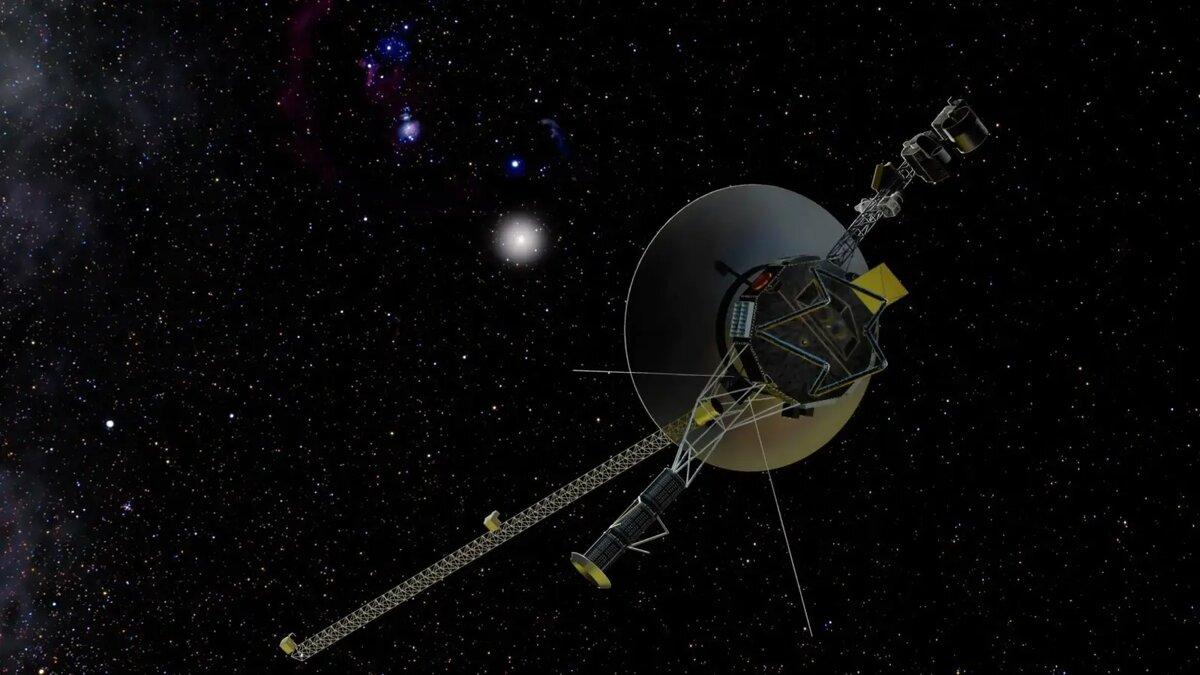
NASA's Voyager 1 reaches a new distance milestone: one light-day from Earth. A radio signal now takes a full 24 hours to reach the spacecraft, which has operated for 49 years. Engineers are also investigating an interruption in the probe's data transmissions.
Voyager 1 is the first human-made object to travel that far. It passed the mark at 5:16 a.m. ET, when it was about 25.9 billion kilometers from Earth.
NASA confirmed the milestone after the probe's reply reached flight controllers in California a full day after it was sent. Engineers used the spacecraft's radio signal and trajectory calculations to establish its distance.
Engineers investigate missing data
Voyager 1 has sent no science or engineering data since November 14, NASA said in a mission update. The spacecraft is still transmitting a carrier signal, the steady radio tone that normally carries its data.
Antennas in NASA's Deep Space Network continue to receive the tone. It shows that Voyager 1 remains pointed at Earth and that its transmitter works.
A similar problem began in November 2023 and was traced to an onboard computer. Engineers are using that earlier repair to guide their search for the current issue.
The team is also checking for a connection to a silence of about two days in October. Voyager 1 recovered from that interruption on its own.
Each command now takes a day to arrive, and a reply takes another day. NASA warned that diagnosis could take weeks or longer.
Project manager Suzanne Dodd said, “We do have a very strong carrier signal.” She added, “I’m confident that it won’t be too long, and it will send us data back.”
Voyager's long journey continues
Launched in September 1977, Voyager 1 flew past Jupiter and Saturn before becoming the first spacecraft to enter interstellar space in 2012. In 1990, it turned its camera back toward Earth to take the Pale Blue Dot picture.
NASA's Jet Propulsion Laboratory in Southern California built and still operates Voyager 1 and its twin, Voyager 2. The second probe entered interstellar space in 2018 and is expected to reach one light-day in 2035.
Both spacecraft continue to send measurements from beyond the heliosphere, the bubble created by the Sun's wind around the solar system.
NASA marked the milestone with events that included an invitation for people worldwide to flash Voyager's call sign, VGR, in Morse code from their phones.
The Planetary Society also unveiled a painting by space artist Don Davis. Davis used a 3D Voyager model and hand-painted details based on photos of the flight hardware.
The painting was unveiled during a free livestream with Dodd, mission manager Kareem Badaruddin and project scientist Linda Spilker.
 Take the quizWhat Kind of Holiday Spender Are You? Take the Black Friday QuizStart →





 Markets · FintechHow to Calculate Compound Interest: Formula, Examples and the Rule of 72
 Lifestyle · Food & HealthNormal Blood Pressure Chart by Age: Healthy Ranges Explained
 Lifestyle · Food & HealthWhat Is Raynaud’s Syndrome? Why Fingers Turn White in the Cold
 Lifestyle · Food & Health4 Ways Walking After Meals Helps Your Body, Doctors Say