SpaceX Catches Starship Mid-Air, and NASA Calls It ‘Almost Magic’
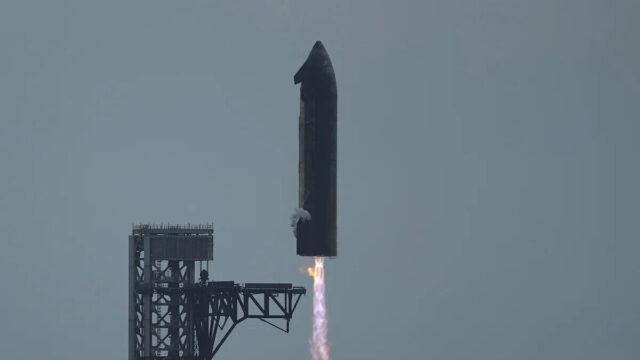
SpaceX caught the upper stage of its 124-metre Starship in mid-air at Starbase, Texas, after a flight of about 22.5 hours. NASA Administrator Jared Isaacman said the return was "almost magic". It is the first catch of a full spacecraft.
SpaceX caught the upper stage of its Starship rocket in mid-air on a cloudy Saturday afternoon at Starbase in Texas, and NASA Administrator Jared Isaacman called the craft's return "almost magic." It is the first time anyone has caught the main spacecraft of a mega rocket as it came down.
Standing 124 metres (407ft) tall, Starship is the world's largest and most powerful rocket. SpaceX built it for trips to the Moon and Mars.
How the catch worked
The vehicle orbited Earth 14 times over 22.5 hours. It then dropped out of thick clouds above its Starbase launch site, flipped to a vertical position and descended slowly toward Launch Pad 2.
Two large metal arms on the tower, nicknamed "chopstick arms" and part of the "Mechazilla" tower, closed around the craft like tweezers. Its engines were still roaring at that point. The spacecraft hooked onto the arms and shut them off, and cheers from onlookers replaced the noise.
"That was the missing link, the holy grail of spaceflight," said SpaceX mission commentator Dan Huot. "We caught a Starship and now everything changes."
Reactions from Musk and NASA
SpaceX founder and CEO Elon Musk congratulated what he called an "incredible team." After the catch, he and his engineers inspected the vehicle and said everything appeared to have worked well, including the vital heat shield. "Ship 42 looks great!" Musk wrote on X, posting photos and videos from the tower.
NASA is paying billions of dollars for Starship to land astronauts on the Moon later this decade. Isaacman wrote on X that it was "almost magic." He added: "Making more believers by the day…one step closer to [the moon]."
Why returning is hard
Spacecraft coming back to Earth fight gravity and atmospheric forces that are nearly impossible to predict perfectly. The first artificial satellite, Sputnik 1, burned up on its return.
Several crewed vehicles have been destroyed on re-entry. Soyuz 1 came back in April 1967 but its parachutes failed to deploy properly, and cosmonaut Vladimir Komarov died in the crash-landing near the Ural mountains. Decades later, the space shuttle Columbia disintegrated during re-entry and all seven astronauts aboard were killed.
Safety has improved a great deal since, according to the account of the flight. Even so, many spacecraft cannot be reused after splashing down in the sea or landing on land.
Boosters first, now the ship
Since October 2024, SpaceX has caught its boosters three times. Those are the stages that push the rocket up and separate once their fuel runs out. Until this weekend, the main spacecraft had never been caught.
Aerospace engineers around the world have praised the capture, which signals that giant rockets could soon be fully reusable. Niharika Patel, a Technical Programme Manager at the US space infrastructure company Loft Orbital, said watching it happen was "magical."
 Take the quizWhat Kind of Holiday Spender Are You? Take the Black Friday QuizStart →





 Lifestyle7 Signs Your Social Battery Is Running Low (and Why You Keep Cancelling Plans)
 Lifestyle · Food & HealthThanksgiving Food Safety: How Long Leftovers Last and the Safe Turkey Temperature
 Lifestyle7 Quiet Habits of Emotionally Intelligent People, According to Psychologists
 LifestylePeople Who Don’t Like Celebrating Their Birthday Often Share These 7 Traits