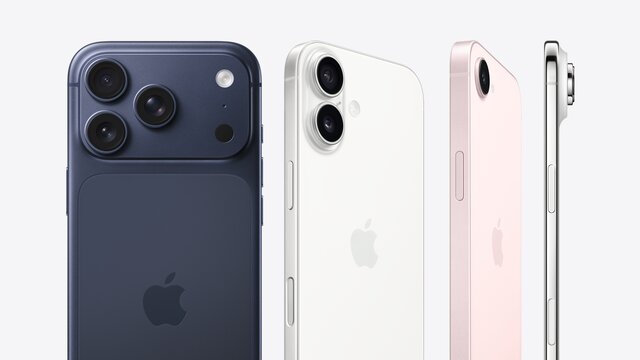
iPhone 15 Ditches Lightning for USB-C, Adds A17 Pro Chip
Apple's iPhone 15 lineup brings USB-C, improved cameras, and the A17 Pro chip. Here's how the new models compare and what's changed from iPhone 14.
Apple released the iPhone 15 and iPhone 15 Plus in September 2024, marking the first major shift in the lineup's charging standard in nearly a decade. The new phones ditch Lightning for USB-C, join the A17 Pro processor family, and gain camera upgrades across the board—but the core design language remains familiar.
Both models come in five colors: black, white, blue, green, and yellow. The iPhone 15 starts at $799 for 128GB, while the iPhone 15 Plus begins at $899 for the same storage. That's a $100 jump from iPhone 14 and iPhone 14 Plus pricing, though Apple discontinued both older models.
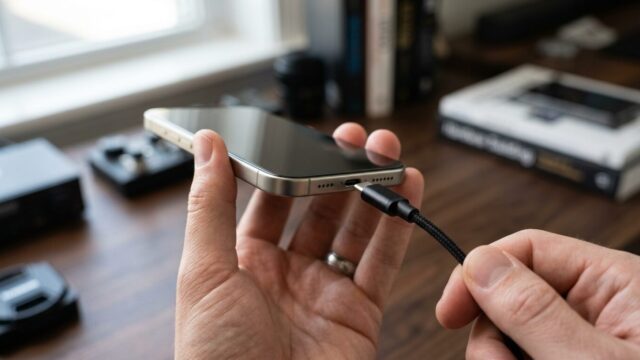
The most obvious change is the USB-C port on the bottom. This means faster file transfers (up to 480 Mbps on iPhone 15 and iPhone 15 Pro models), support for Thunderbolt 3 connectivity, and compatibility with a wider ecosystem of chargers and cables. You'll no longer need Apple's proprietary Lightning adapter for most use cases.
Camera and Processing Power
Inside, the A17 Pro chip powers both models. This isn't the base A17 found on iPhone 15 Pro—it's Apple's full-fat flagship processor with a 6-core CPU, 5-core GPU, and dedicated machine learning hardware. Real-world performance differences versus the iPhone 14's A16 are modest for everyday tasks, but the A17 Pro delivers faster gaming, smoother video editing, and snappier AI features.
The camera system got a meaningful overhaul. iPhone 15 keeps the dual rear camera setup (48MP main + 12MP ultra-wide), but the main sensor is new. It handles 24MP photos by default and switches to 48MP only when you zoom or shoot in high-resolution mode. Low-light performance improved, and the system now includes Night Mode on the ultra-wide lens for the first time.
Portrait mode on video is now standard—Apple calls it Cinematic Mode—and it works on both rear and front cameras. Face-detection autofocus and automatic focus pulls during video recording round out the changes.
Battery and Performance in Daily Use
Battery life claims go up slightly. Apple says iPhone 15 delivers up to 20 hours of video playback (versus 19 hours on iPhone 14), while iPhone 15 Plus reaches up to 26 hours. Real-world endurance depends heavily on usage—power users won't see a full extra day, but moderate users might eke out an afternoon without charging.
The 6.1-inch and 6.7-inch displays remain the same size and resolution as their predecessors. The Super Retina XDR panels use OLED technology and peak at 2,000 nits in standard mode, 3,000 nits in peak HDR brightness. That's identical to iPhone 14 specs.
Water resistance held steady at IP68, meaning the phones survive submersion in up to 6 meters of freshwater for 30 minutes.
iPhone 15 vs iPhone 15 Pro: Key Differences
The iPhone 15 Pro and iPhone 15 Pro Max sit in a different price bracket ($999 and $1,099 respectively) and use the full A17 Pro with a 6-core GPU instead of 5-core. The Pro models include a periscope telephoto lens (up to 12x optical zoom), a titanium frame instead of aluminum, Action button customization, and an always-on display with dynamic island cutout. iPhone 15 and iPhone 15 Plus stick with Dynamic Island as well, but lack the telephoto and titanium.
Storage starts at 128GB across all models. iPhone 15 and iPhone 15 Plus max out at 512GB; Pro models go up to 1TB.
Software and AI Features
All iPhone 15 models ship with iOS 17, which includes the new Control Center redesign, StandBy mode for nightstand charging, and AirDrop over the internet. Apple Intelligence—the company's on-device AI system—launched later, arriving first on iPhone 15 Pro models in iOS 18.1. Standard iPhone 15 and iPhone 15 Plus do not support Apple Intelligence features due to hardware limitations.
Wireless charging remains at 25W, and MagSafe continues unchanged. The removal of the charging brick from the box persists; you'll need to supply your own USB-C power adapter.
For most buyers, iPhone 15 represents an iterative upgrade. The USB-C switch is convenience-driven, the A17 Pro handles future apps without strain, and camera improvements are real if not dramatic. If you're still using an iPhone 12 or older, the leap is worth considering. iPhone 14 owners gain little reason to upgrade immediately.