NASA Asteroid Impact: Hera Reveals Unseen Terrain
The European Space Agency’s Hera spacecraft has photographed a previously unseen side of Didymos, the larger companion of the asteroid NASA struck in 2022. Scientists will investigate whether debris from the collision reached Didymos and helped shape features visible in the new images.
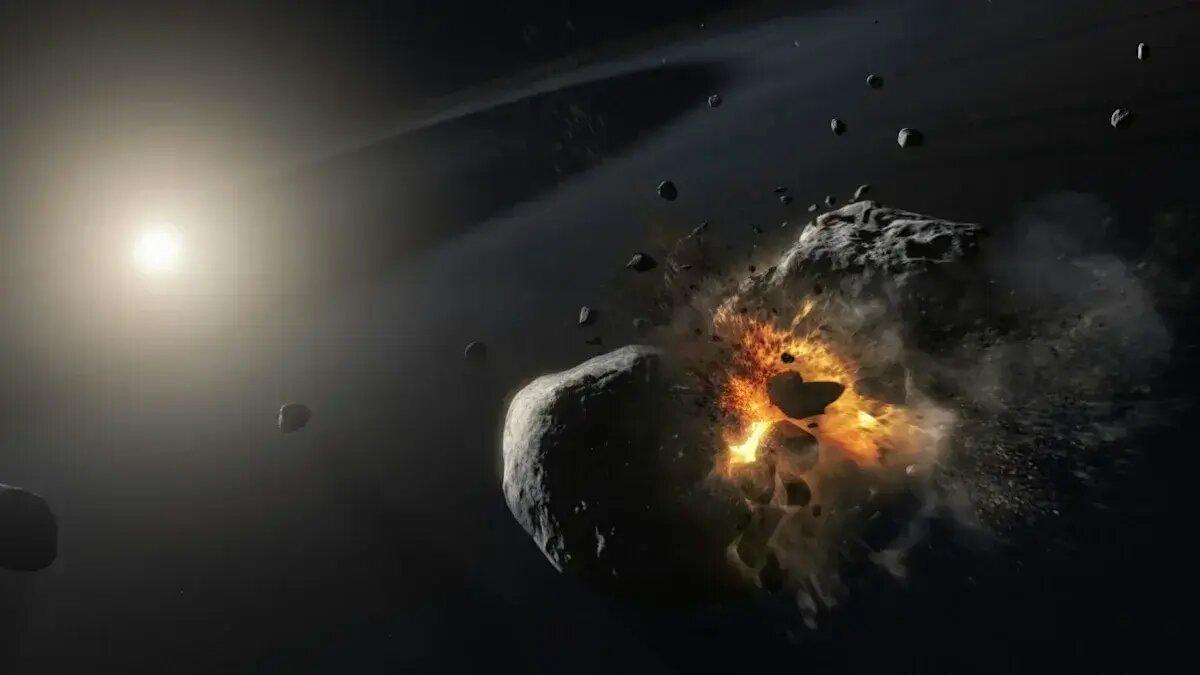
The European Space Agency’s Hera spacecraft has photographed a previously unseen side of Didymos, the larger companion of the asteroid NASA struck in 2022. Scientists are investigating whether debris from the collision reached its surface.
The images do not establish that it did. They show boulders, craters and features that appear to be grooves or ridges.
Hera’s investigation could improve predictions for future attempts to redirect an asteroid. NASA’s impact demonstrated that a spacecraft could change an asteroid moonlet’s orbit.
A new view of Didymos
Hera’s black-and-white Asteroid Framing Camera took the image from 60 km away. Didymos measures 780 m across, while its smaller companion, Dimorphos, measures 151 m across.
The view shows a side of Didymos that NASA’s DART spacecraft did not capture in comparable detail during its final approach in September 2022. A raised band around the equator appears on both sides.
“The first thing we said was wow!” said Hera principal investigator Patrick Michel, director of research at CNRS / Observatoire de la Côte d’Azur. He said the newly photographed side has the same equatorial ridge but otherwise appears different.
A second preview released on November 12 showed a small patch of Dimorphos near Didymos. Taken from 56 km away, it also showed large boulders, smoother areas and the equatorial ridge.
The early pictures are snapshots rather than a complete map. Hera’s continued observations are intended to build a fuller picture of both asteroids.
Impact debris may have traveled
NASA sent the 580 kg DART spacecraft into Dimorphos on September 26, 2022, at around 6.1 km/s. Before impact, the moonlet took approximately 12 hours to orbit Didymos.
Follow-up observations showed that the orbit had shortened by about 33 minutes, with an uncertainty of about a minute. The change was greater than many scientists had predicted before impact.
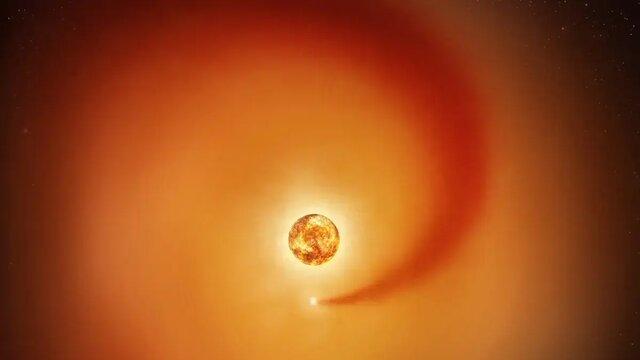
The collision sent a debris plume across thousands of kilometers. The asteroids were about 1 km apart, and scientists are considering whether some material crossed that gap.
Didymos spins once every 2.2 hours. Models suggest loose material on rapidly rotating asteroids can move toward the equator, potentially explaining the ridge.
Hera will study the aftermath
Hera reached the Didymos system in November 2026 after a journey of approximately two years. It has begun collecting information before a more detailed investigation.
Researchers need better measurements of Dimorphos’s mass and structure, the material displaced and the changes caused by impact. Those measurements may help explain the larger-than-predicted orbital change.
Hera carries instruments to map the system and will deploy two small CubeSats, or small spacecraft, for detailed observations. Scientists will use the data to test models of asteroid deflection by impact.
Detailed images of both asteroids are scheduled for release on November 25.
 Take the quizWhat Kind of Holiday Spender Are You? Take the Black Friday QuizStart →
- 1U.S. Emergency Alert Test Nov. 17 Is Not a Power Outage

- 2Gold Silver Price November: Futures Rise Near Yearly Lows

- 3Michael Clarke Says Sandpapergate Scars Drew Steve Smith to New York

- 42027 NFL Mock Draft Puts Ohio State’s Jeremiah Smith at No. 1

- 5GTA 6 New Zealand Time Trick Is Not Guaranteed to Work

 Lifestyle · Food & Health4 Reasons to Eat Oatmeal, According to Nutrition Experts
 Lifestyle7 Signs Your Social Battery Is Running Low (and Why You Keep Cancelling Plans)
 Lifestyle · Food & HealthThanksgiving Food Safety: How Long Leftovers Last and the Safe Turkey Temperature
 Lifestyle7 Quiet Habits of Emotionally Intelligent People, According to Psychologists