Botswana’s Ancient Failed Rift Is Moving Again
A study of a fault in eastern Botswana suggests an ancient rift has become active again inside the Kalahari Craton. Researchers traced movement along the Khurutshe Fault to roughly 180 million years ago and found evidence that the same fault is moving today.
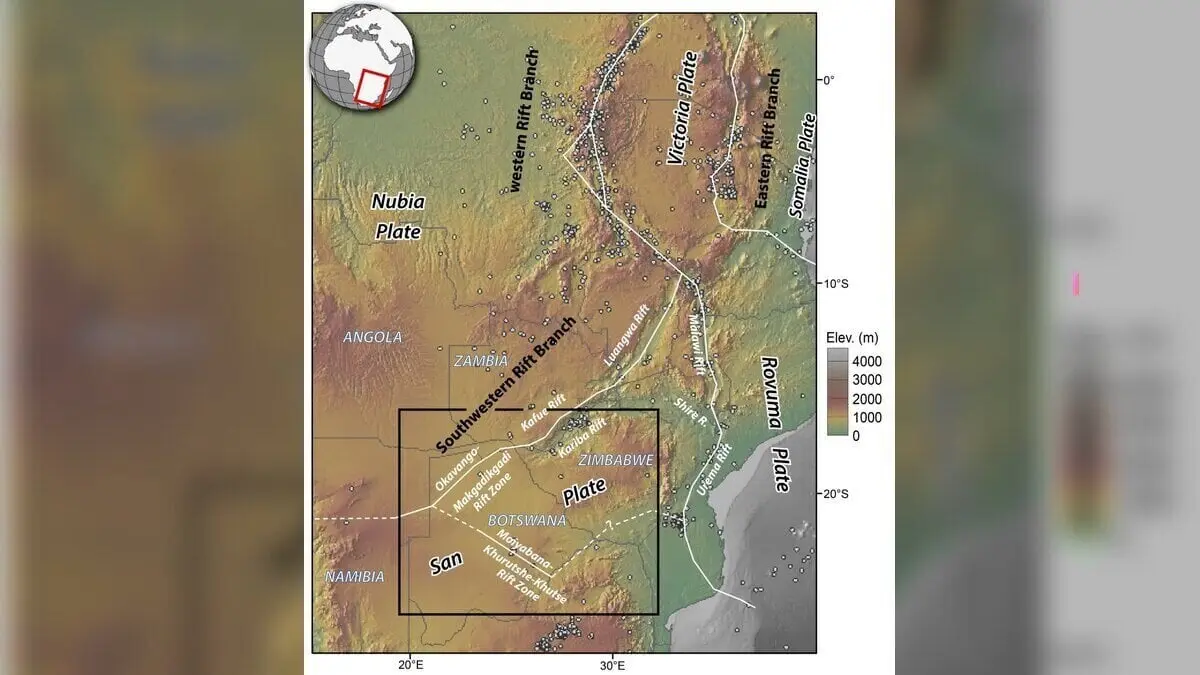
An ancient failed rift is moving again beneath eastern Botswana, where a magnitude 6.5 earthquake struck the Kalahari Craton in April 2017. Researchers say the finding challenges the view that such old continental cores are too rigid to pull apart.
The rift has tried before. Evidence along the Khurutshe Fault points to movement roughly 180 million years ago and renewed activity today.
The study was led by researchers at the Botswana International University of Science and Technology and the Lamont-Doherty Earth Observatory. Their findings appear in the journal Tectonics.
A craton is an ancient core of a continent. The Kalahari Craton contains blocks of crust up to 3.7 billion years old.
“The earthquake happened in the middle of the craton, a region where no one expected to have an active fault slipping, let alone an active plate boundary developing,” said co-author Folarin Kolawole, a structural geologist at Lamont.
Fault preserves two periods of movement
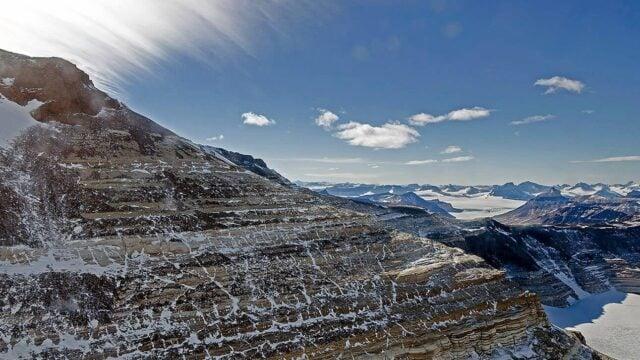
The Khurutshe Fault cuts a 50-mile-long scarp, or step in the ground, across the Kalahari landscape. It lies about 50 miles south of the 2017 earthquake. In places, one side stands as much as 400 feet higher than the other.
Researchers dug trenches across the scarp alongside Botswana’s A1 highway. They also examined deeper excavations for a government water pipeline and records from 20 groundwater boreholes.
The team imaged underground rock using electrical resistivity tomography, a technique Kolawole compared to a CAT scan of the fault.
Modern desert sands and much older Jurassic rock layers both formed wedges against the fault. Such wedges can develop when one side of a fault drops and sediment accumulates in the lower area.
The team concluded that the rift opened during widespread stretching in the Jurassic period, then failed and went dormant. The East African Rift System is now pulling on it again.
Researchers do not know when the rift reawakened. The fault has displaced young Kalahari sands laid down mostly within the last 2.6 million years.
Rift extends farther south
Studies of the 2017 earthquake showed that the East African Rift System reaches nearly 200 miles farther south than scientists had thought, into the Kalahari Craton. Its southern end had previously been placed in northern Botswana’s Okavango Rift Zone.
Researchers found that faulting began before volcanic activity reached the area during the Jurassic. They say the rift appears to have followed an ancient seam where the craton’s oldest pieces fused billions of years ago.
The team also proposes that a region some scientists call the San Plate may be slowly breaking into two smaller plates. The researchers call them the North San Plate and the South San Plate.
Any breakup would take millions of years, if it happens at all. GPS measurements show southern African rifts opening much more slowly than more mature segments in Malawi, Kenya and Ethiopia.
“Maybe you need to reactivate the rift multiple times,” Kolawole said. “You need to try multiple times before it actually succeeds.”
 Take the quizWhat Kind of Holiday Spender Are You? Take the Black Friday QuizStart →




 Markets · FintechHow to Calculate Compound Interest: Formula, Examples and the Rule of 72
 Lifestyle · Food & HealthNormal Blood Pressure Chart by Age: Healthy Ranges Explained
 Lifestyle · Food & HealthWhat Is Raynaud’s Syndrome? Why Fingers Turn White in the Cold
 Lifestyle · Food & Health4 Ways Walking After Meals Helps Your Body, Doctors Say