Bangka Tengah Free Halal Certification for MSMEs
Bangka Tengah Regency offers free halal certification for MSMEs to boost quality, widen market access, and support local business growth.
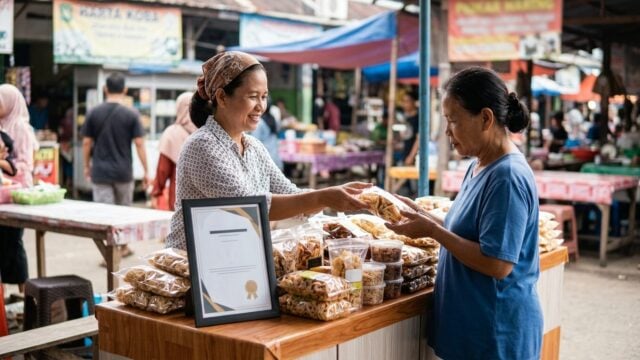
KOBA — Bangka Tengah Regency is offering free halal certification for MSMEs as local officials push to lift product quality and widen market access for small businesses in the food, beverage, and processed agriculture and fisheries sectors.
The program comes as the regency records about 26,000 active MSMEs by March 2026, while 327 businesses have already secured halal certificates. For many local entrepreneurs, that gap still leaves huge room for growth.
Bangka Tengah Regency Offers Free Halal Certification for MSMEs
Regent Algafry Rahman said the local government is preparing a series of programs to strengthen regional products and production capacity. Free halal certification is one part of that push.
“The local government is facilitating the issuance of halal certificates for MSME actors free of charge as part of a program to improve the quality of regional flagship products,” Algafry said in Koba on Sunday.
The policy matters because halal certification has become more than a formality in Indonesia’s food economy. For consumers, the label signals trust. For businesses, it can decide whether a product gets onto supermarket shelves, enters online marketplaces, or qualifies for wider distribution outside the immediate local market.
That is especially true for food and drink producers, where buying decisions often start with a quick check of ingredients, processing, and legal status. Small brands that lack certification can still sell locally, but they face a harder climb once they try to reach broader buyers.
What the certificate changes for small businesses
Algafry said halal certification adds value to products and gives consumers assurance about quality and safety. The regency government sees the certificate as a practical tool, not just a piece of paperwork.
For MSMEs, the value is immediate. Certification can reduce one of the biggest early-stage burdens: cost. It can also help business owners who already know how to make a product, but struggle with licensing steps, documents, and guidance.
In Bangka Tengah, that support touches a wide part of the local economy. MSMEs absorb labor, move goods through village-level supply chains, and keep daily trade alive. When one small producer grows, the effect often reaches suppliers, transport workers, traders, and nearby households.
“Strengthening the MSME sector is one of the focuses of regional economic development because it can absorb labor and drive the community economy,” Algafry said.
The local government also wants the program to help regional flagship products become more competitive. That is a key point for a regency where many businesses are still built around familiar household products and local raw materials. Once certification is in place, those products can look more credible to buyers beyond the village or district border.
And for consumers, that can make a difference. People buying packaged snacks, drinks, or processed fish products often want a cleaner decision. A halal certificate offers a clear signal. It cuts hesitation. It also raises expectations on how the product is made.
In practical terms, the free service can also change how quickly MSMEs move from informal sales to more structured business growth. A certificate alone will not solve weak branding or poor packaging, but it removes one hurdle that has long slowed many small operators.
327 businesses have already received certificates
Data from the Bangka Tengah Office of Industry, Trade, Cooperatives, and SMEs shows 327 business owners have already obtained halal certificates. The number is still small compared with the total active MSME base, but it shows the program has started to reach the ground.
With around 26,000 active MSMEs, the regency still has a long way to go. The biggest potential sits in the food sector, which includes products that are sold every day and are most closely linked to household spending.
The administration wants more owners to use the facility, especially those who still rely on local sales. For them, halal certification can serve as a simple differentiator in a crowded market. It does not guarantee sales overnight. But it can help a product stand out when buyers compare similar items side by side.
Officials say the program will continue in line with MSME needs. That matters for a region where growth depends on small businesses becoming more formal, more visible, and more ready to compete across Bangka Belitung Islands.
As of now, the regency has 26,000 active MSMEs and 327 certified businesses — a small slice of the market, but one the local government hopes will keep expanding through free halal certification.